
The short answer
Choose off-the-shelf software when a standard tool covers how you work and speed matters most. Choose custom real estate software when you need features, integrations, or ownership that templates and subscription tools can’t give you. Many businesses combine both.
We provide custom real estate software development, and we still recommend off-the-shelf tools when they’re the better fit. Here’s how to tell.
Custom vs. off-the-shelf: side-by-side comparison
| Factor | Off-the-shelf software | Custom real estate software |
|---|---|---|
| Upfront cost | Low: setup and configuration | Higher: design and development |
| Ongoing cost | Monthly or per-user subscription fees | Hosting, support, and improvements |
| Time to launch | Days to weeks | Weeks to months, often in phases |
| Fit to your workflow | You adapt to the tool | The software adapts to you |
| Integrations | Limited to what the vendor supports | Connect the systems you choose |
| Branding and search experience | Shared templates and limits | Fully branded and unique |
| Data and platform ownership | Vendor platform, export limits | You own the code and data |
| Scalability | Plan tiers and the vendor’s roadmap | Grows with the features you prioritize |
| Changes and new features | Requested from the vendor | Built when you need them |
When off-the-shelf software makes sense
- You’re a small team with standard needs
- You need to launch in days, not months
- Your budget is limited today
- The tool already integrates with the systems you use
- You’re testing an idea before investing more
When custom real estate software makes sense
- You need a custom listing platform or property search that stands out
- Your workflow doesn’t fit standard tools, and workarounds cost your team time
- You want a CRM built around your pipeline
- Subscription fees keep rising as you add users and features
- You want to own your platform, brand experience, and data
- Software is part of how you compete
The hybrid approach
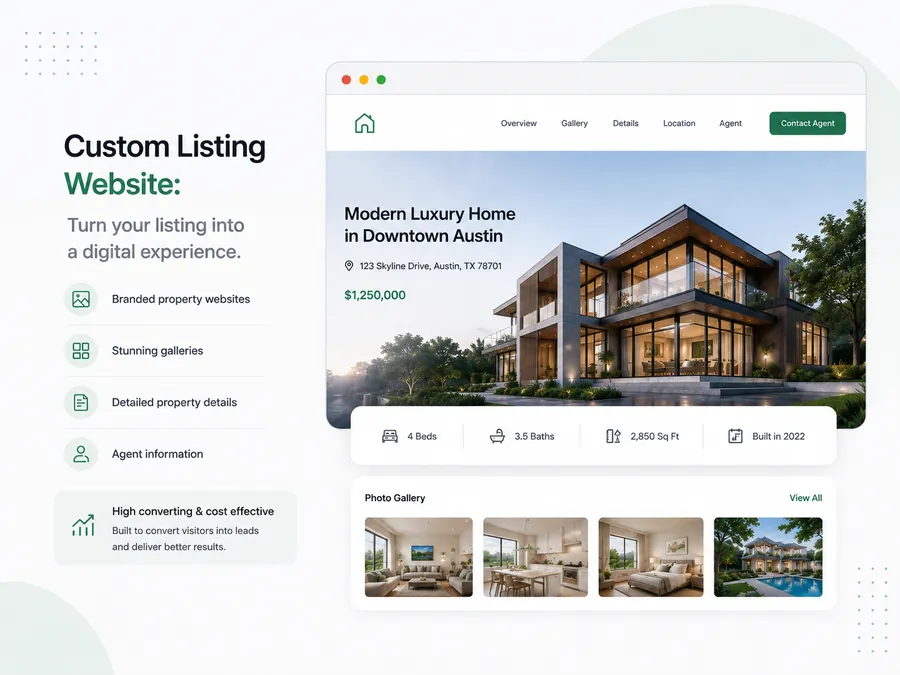
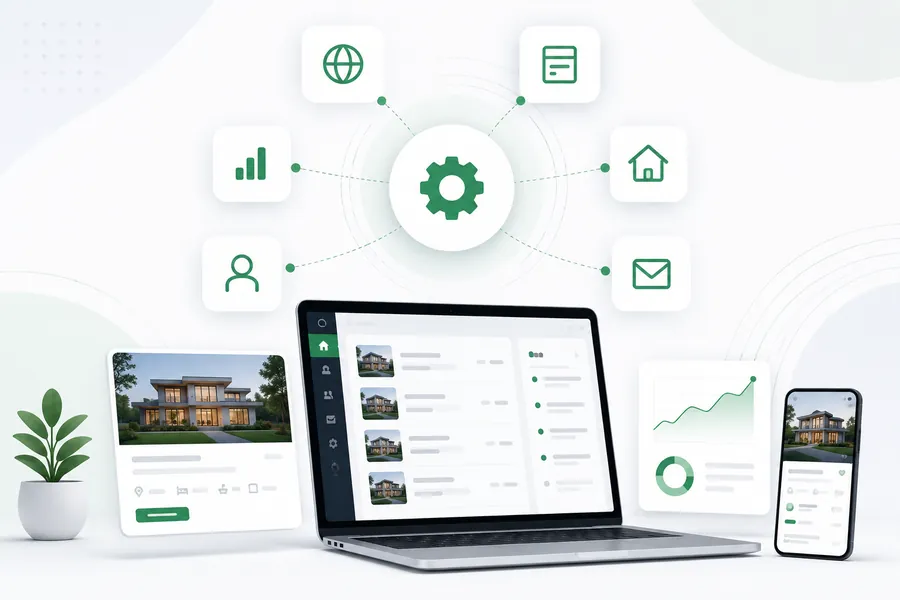
You don’t have to choose one or the other. A common approach keeps a proven CRM or back-office tool and adds a custom website, listing platform, or automation that connects everything. You get speed where standard tools work and custom software where it makes a difference.
Questions to help you decide
- Which tasks take your team the most time today?
- What can’t your current tools do?
- Which systems need to share data?
- How many users will you have in two years?
- How important is owning your platform and data?
- What budget and timeline are realistic?
What about cost?
Off-the-shelf tools cost less upfront but add subscription fees over time. Custom software costs more to build but can lower ongoing fees and replace several tools. Our real estate software development cost guide explains what drives the budget for each type of project.
Not sure which approach fits?
Tell us how your business works today and we’ll give you an honest recommendation, even if that’s an existing tool.